-
Course Code
APIQ-024
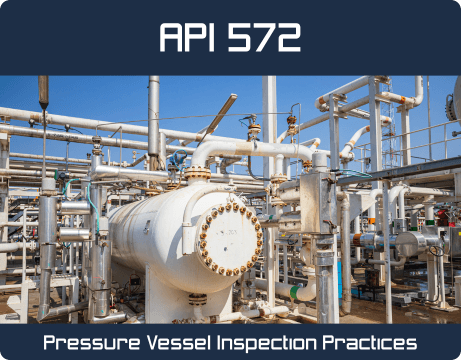
API 572 - Inspection Practices for Pressure Vessels
- Our course is designed to provide participants with a detailed and up-to-date overview of pressure vessels inspection practices in accordance with API 572. It covers the standard inspection terminology based on API RP 572 and API 510; the common methods of construction and materials, internal components and equipment, uses of pressure vessels, design and construction standards; the reasons for inspection; the inspection plans for specific types of damage; and reviewing and updating of inspection plans.
- It covers the standard inspection terminology based on API RP 572 and API 510; the common methods of construction and materials, internal components and equipment, uses of pressure vessels, design and construction standards; the reasons for inspection; the inspection plans for specific types of damage; and reviewing and updating of inspection plans.
Learning Outcomes
- Define the standard inspection terminology based on API RP 572 and API 510
- Apply and gain an in-depth knowledge on pressure vessels inspection practices in accordance with API 572
- Explain the reasons for inspection and apply inspection plans for specific types of damage
- Review and update inspection plans and discuss risk-based inspection
- Identify the frequency and extent of inspection as well as carryout safety precautions and preparatory work
- Discuss the common methods of construction and materials, internal components and equipment
- Apply thickness measurements, external and internal inspection and special methods of detecting mechanical damage
- Recognize precautions regarding the use of breathing air including inspection methods and limitations
- Employ condition assessment and repair, derating and fitness-for-service, visual inspection, methods of repair and repair of supporting vessel equipment
- Identify metallurgical changes and in-situ analysis of metals and perform pressure and vacuum testing
Course Contents
- Introduction to Pressure Vessels
- Inspection Plans
- Inspection Methods & Limitations
- Inspecting Practices for Towers
- Code Scopes
- New Piping Calculations
- Existing Piping Calculations
- Piping Pressure Test
- Brittle Fracture
- Preheat and Postweld Heat Treatment
- Thermal Expansion and Contraction
- ASME B16.5
- Material Verification Program
- Repairs, Alterations, and Rerating of Piping
- Section IX 570
- WPS's and PGR's
- Writing a Welding Procedure Specification
- Section V
- RP-571 Damage Mechanisms
- API 574 Inspection
- RP-577 Welding Inspection and Metallurgy
- Overview of the 570
- Overview of the 574
Our Methodology
- Make coaching and monitoring innovative and using modern
- Media training also using on the go training by using interactive means and focusing on
- The exercises, practical applications and real situations study
- Live delivery method, instructor-led training
- Experienced consultant, trainers, and professional
- Qualified trainer with high-level experience
Attendance Reports
- Send daily attendance reports to training departments
- Send full attendance report to training dep. by the end of the course
- Attend 100 % from the course days also provide daily
- Issue attendance certificate for participant who attend minimum 80% from the course duration
Pre/Post Reports
- Pre- assessment before starting training
- Post assessment after finishing training
- Full report for the difference between Pre-& Post assessment
Who Should Attend
- Inspectors
- QA/QC personnel
- Engineers & Tradespeople
- Who are working for plant owners, pressure equipment manufactures and repair organizations, engineering procurement and construction companies in oil and gas industries, chemical plants, petroleum refining, petrochemical plants, power plants, pulp and paper plants.
